Step-by-Step Guide to Implementing Shipment Tracking in WooCommerce
By Editorial Team |
Providing customers with the ability to monitor their packages directly from your online store significantly enhances satisfaction and encourages repeat business.
The implementation process is straightforward. Based on experience assisting numerous WooCommerce store operators, we have identified an efficient method for setting up shipment tracking that simplifies the process for both merchants and customers.
Whether you process a handful of orders weekly or manage hundreds daily, an effective tracking system can dramatically improve the post-purchase experience.
This comprehensive guide provides detailed, sequential instructions for integrating shipment tracking functionality into your WooCommerce store.
Benefits of Adding Shipment Tracking to Your WooCommerce Store
Implementing shipment tracking functionality provides customers with reassurance and builds confidence that their purchases are securely en route.
This transparency replaces uncertainty with trust in your business operations.
Additionally, as a store administrator, having access to shipment tracking within your WooCommerce order management system enables you to monitor package locations in real-time.
Should any issues or delays arise, you can promptly contact the shipping provider and inform your customer about the situation, thereby improving your customer service capabilities.
Overall, WooCommerce shipment tracking represents a simple yet effective method for maintaining communication transparency and enhancing customer satisfaction, which positively influences sales performance.
With these advantages in mind, let's examine the practical steps for adding tracking capabilities to your WooCommerce platform. Below is a brief overview of the procedures covered in this tutorial:
- Step 1: Install the Advanced Shipment Tracking Plugin
- Step 2: Configure General Plugin Settings
- Step 3: Configure Your Shipping Carriers
- Step 4: Add Tracking Information to Individual Orders
- Step 5: Bulk Import Tracking Data (Optional)
- Step 6: Test Order Tracking and Email Notifications
- Additional Recommendation: Enhancing the Complete Customer Experience
Step 1: Install the Advanced Shipment Tracking Plugin
This tutorial utilizes the Advanced Shipment Tracking for WooCommerce extension. This solution is widely recognized as one of the premier tracking plugins available and seamlessly integrates tracking numbers into customer account pages and order confirmation emails.
Furthermore, this complimentary plugin includes built-in compatibility with more than 300 shipping providers, including major services like FedEx, DHL, and USPS. International carriers such as DPD, Canada Post, and Australia Post are also supported.
Begin by installing and activating the Advanced Shipment Tracking for WooCommerce plugin. For detailed installation guidance, consult standard WordPress plugin installation documentation.
Step 2: Configure General Plugin Settings
Next, we will adjust the WooCommerce shipment tracking plugin's configuration parameters.
After activation, you will notice a 'Shipment Tracking' option within your WooCommerce administration menu. Select this option to access the plugin configuration interface.
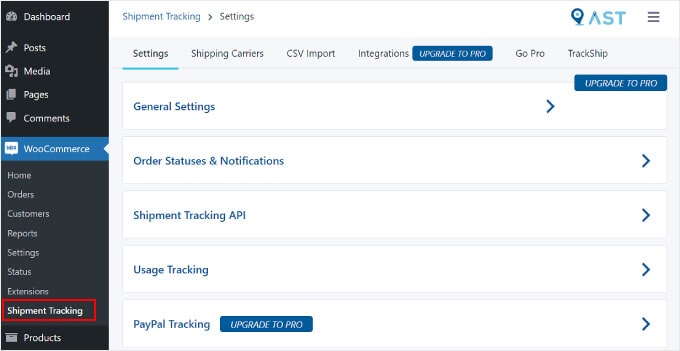
This interface contains several configuration areas requiring attention.
The initial tab includes multiple settings for customizing your WooCommerce order tracking functionality. The first section is 'General Settings'.
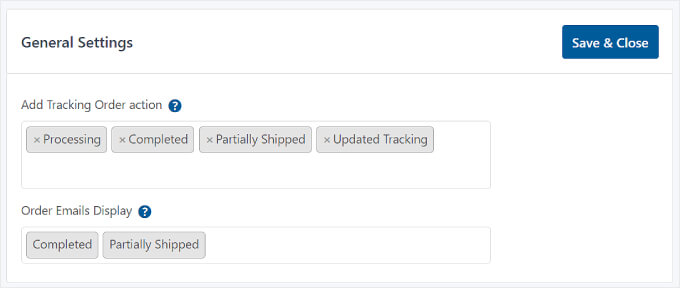
Within the 'Add Tracking Order action' area, you can specify which order status types should display on your WooCommerce Order management page.
Using the 'Order Emails Display' setting, you can determine which order status emails will include tracking URLs for customer distribution. Tracking information will also be accessible through the customer's View Order or My Account interface.
Premium version users can create customized order statuses.
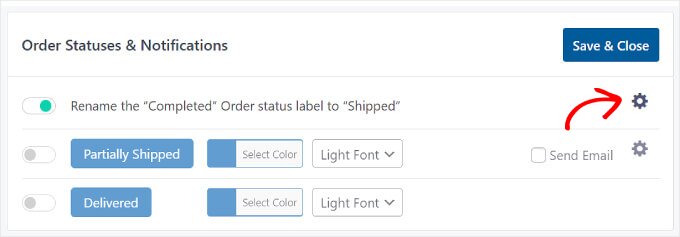
Scroll downward to locate 'Order Statuses & Notifications.' Many store administrators modify the status label from 'Completed' to 'Shipped' in this section, as this terminology provides clearer communication to customers.
You can also select the gear icon to personalize the design and content of your shipping notification email templates.
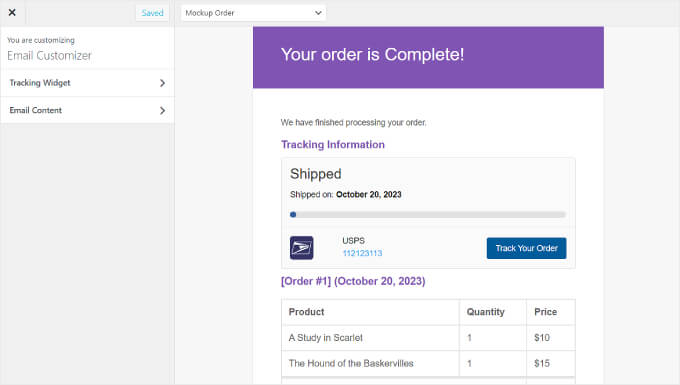
You will then access the 'Email Customizer,' which resembles the WordPress Theme Customization interface.
Here, you can adjust the design and content of WooCommerce order and shipping notification email templates.
Next, examine the 'Shipment Tracking API' section.
This functionality enables tracking number updates from third-party services and order completion from external systems. It permits adjustment of shipping date formats when tracking information is synchronized from other platforms.
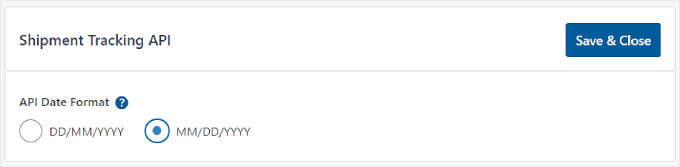
Below that configuration, you will find the 'Usage Tracking' menu.
In this section, you can opt to receive email notifications regarding security and feature updates, and share basic WordPress environment information with the plugin development team.
Unless you are integrating your store with external systems such as warehouse management software, you can safely disregard the 'Shipment Tracking API' and 'Usage Tracking' settings, as these cater to more advanced implementation scenarios.
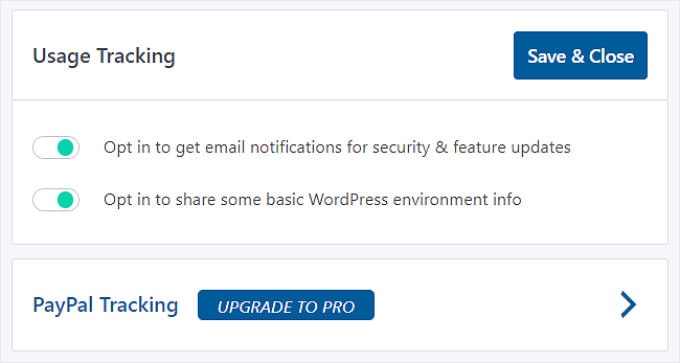
At the bottom, you will notice that PayPal order tracking functionality becomes available when upgrading to the premium version of Advanced Shipment Tracking.
This feature automatically transmits order tracking codes and status information from WooCommerce to PayPal when orders are marked as 'Shipped' or 'Completed'.
After completing adjustments to each shipment tracking setting, select the 'Save & Close' button.
Step 3: Configure Your Shipping Carriers
Proceed to the 'Shipping Carriers' tab. Here you will discover over 300 shipping providers that have established integration with the Advanced Shipment Tracking plugin.
To incorporate a shipping service into WooCommerce, simply select 'Add Shipping Carriers'.

A configuration window will appear where you can specify your preferred shipping providers.