Step-by-Step Guide to Building an Online Training Manual with WordPress
Many WordPress users often inquire about creating digital training manuals using the platform. Numerous experienced developers have successfully implemented training documentation systems for various purposes over the years.
Digital training manuals serve multiple valuable functions, including onboarding new team members, distributing product information and usage instructions, educating customers about services, and facilitating knowledge transfer. With appropriate tools, integrating comprehensive training materials into your website becomes straightforward.
This guide will demonstrate the process of developing a professional online training manual using WordPress.
The Value of Digital Training Manuals in WordPress
Despite some perceptions that training manuals are outdated, they remain essential tools for ensuring tasks are completed accurately and consistently.
Digital training manuals provide structured instructions and guidelines for performing specific tasks, jobs, or processes. Whether managing remote teams or in-person organizations, these resources effectively educate both employees and customers.
For instance, training manuals prove invaluable during employee onboarding. This documentation helps new staff members understand company procedures, learn task execution methods, and comprehend various operational processes.
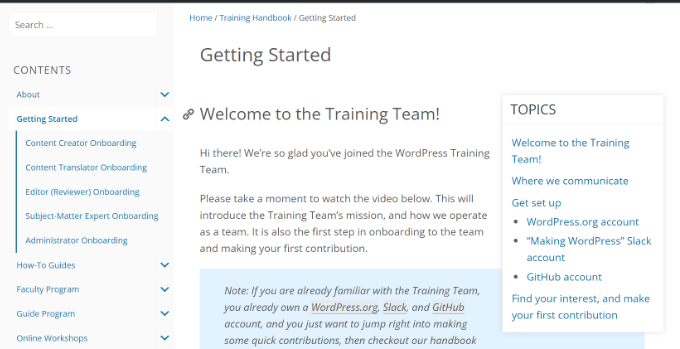
Organizations can also develop specialized training manuals for particular projects or tasks. These documents systematically outline all necessary steps, ensuring proper task completion.
Customer-focused training manuals help users understand product configuration and proper usage through comprehensive online documentation.
Now let's explore the practical steps for creating an online training manual in WordPress.
Configuring a WordPress Training Manual Plugin
The most effective approach for creating online training manuals involves utilizing specialized knowledge base plugins. Several premium solutions offer robust features for building training documentation without requiring coding expertise.
These plugins typically provide user-friendly interfaces with extensive functionality for delivering exceptional support experiences. Features often include comprehensive knowledge base systems, support ticket management, email integration, and FAQ sections to improve response efficiency.
Begin by visiting the plugin provider's website and creating an account. Most solutions require at minimum their core knowledge base plugin for training manual creation.
After account creation, download the knowledge base WordPress plugin from your account dashboard's download section.
Next, install the plugin on your WordPress website. If unfamiliar with plugin installation, consult general WordPress documentation for guidance.
Upon activation, you'll typically encounter a welcome screen. Enter your license key and activate the plugin.
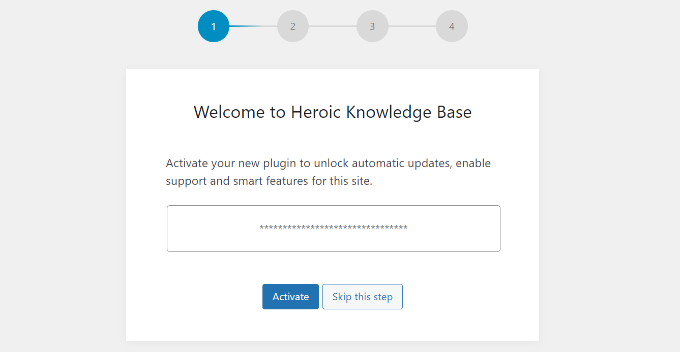
Follow the on-screen setup wizard to configure the plugin according to your requirements.
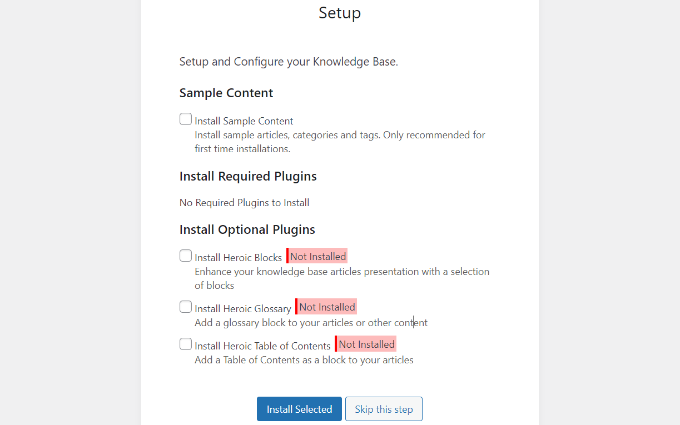
The wizard may prompt you to install sample content, categories, and tags. Many users prefer skipping this step, as plugins typically populate the knowledge base section automatically.
You may also have options to install additional complementary plugins for enhanced functionality, such as specialized blocks, glossary systems, and table of contents generators. For comprehensive documentation, consider installing these supplementary tools.
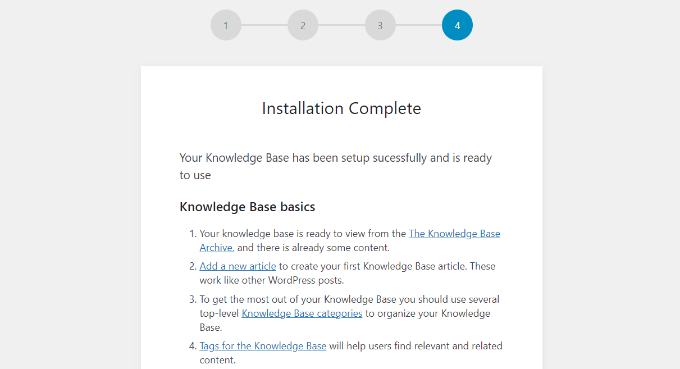
The installation process will complete, and the plugin typically displays basic instructions for your knowledge base section.
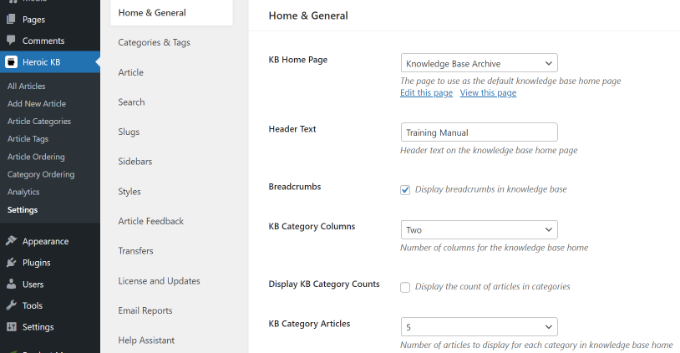
Navigate to the plugin's settings section from your WordPress admin panel.
In the general settings area, you can configure the knowledge base home page, modify header text, select category column quantities, enable breadcrumb navigation, and adjust various display options.
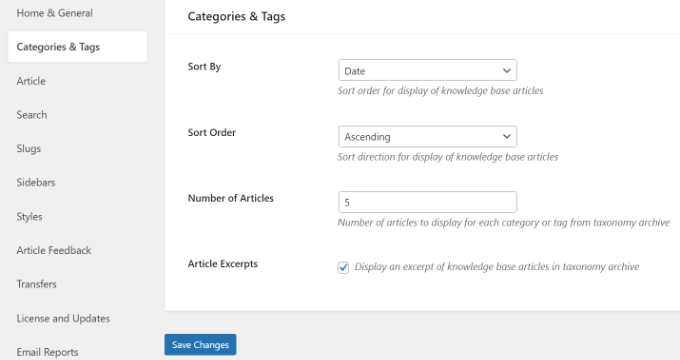
The categories and tags section provides additional configuration options.
Available settings typically include category sorting by date, title, comment count, and other parameters. Additional options may involve sorting order preferences, article quantity displays, and excerpt visibility controls.
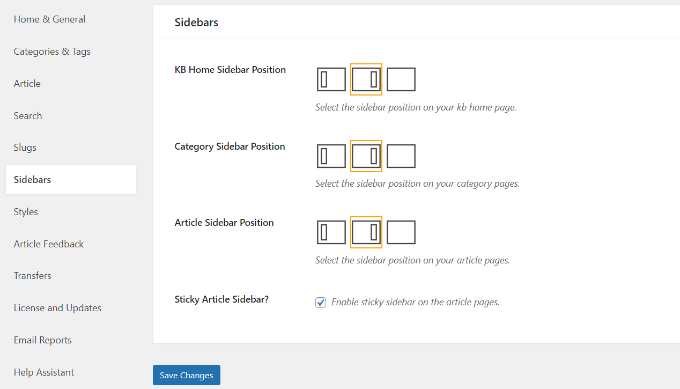
Proceed to the sidebar configuration section.
This area typically offers options for adjusting sidebar positioning within the training manual interface. Many plugins include sticky sidebar functionality for improved navigation.
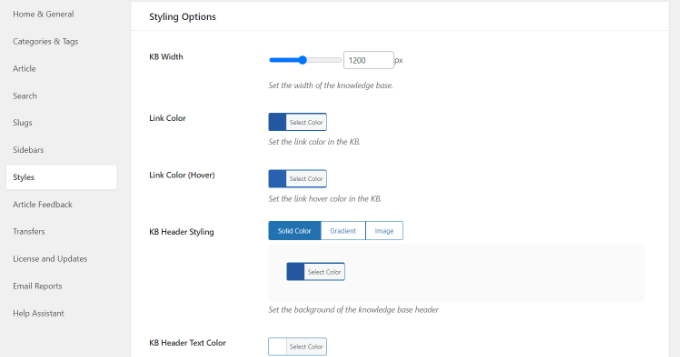
Finally, access the styling options section.
Most plugins provide customization controls for training manual width, link colors, heading styles, and various visual elements.
Remember to save all configuration changes before proceeding.
Most plugins offer additional settings worth exploring based on your specific requirements.
With basic configuration complete, you can now focus on adding content to create your online training manual.
Organizing Training Manual Categories
Begin by establishing categories for your training manual to ensure organized documentation structure.
Navigate to the article categories section within your plugin's dashboard interface.
This area allows content organization through category creation and management.
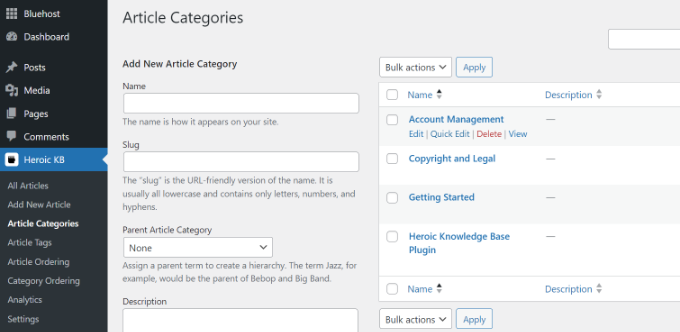
To create new categories, simply provide category names, establish URL slugs, designate parent categories for subcategory relationships, and save your entries.
For demonstration purposes, we've created five distinct categories within our training manual structure.