Essential Strategies for Selecting Top WordPress eCommerce Developers
By Editorial Team |
Choosing the right WordPress eCommerce developer is crucial for the success of your online store. The quality of development work can significantly impact your business outcomes.
Based on extensive experience with WordPress and WooCommerce implementations, many industry professionals have identified the specific skills and attributes that distinguish exceptional developers from average ones.
Through evaluating numerous developers during eCommerce project assessments, it becomes clear that technical proficiency represents just one component of what makes a developer effective.
The most valuable developers possess both deep technical knowledge of WordPress and practical understanding of online business requirements.
This guide presents practical recommendations for hiring WordPress eCommerce developers, drawing from real-world project experience and industry insights.
Benefits of Hiring a WordPress eCommerce Developer
For those new to eCommerce, engaging a WordPress developer represents a strategic decision that provides access to specialized expertise for creating secure, high-performing online stores. This approach saves valuable time and allows business owners to concentrate on growth initiatives.
Professional developers contribute expertise across several critical areas:
- Custom Store Development: They create unique storefronts specifically designed for your brand requirements.
- Performance Optimization: Developers implement techniques to ensure rapid page loading, enhancing user experience and search engine visibility.
- Security Implementation: They establish protective measures against potential security threats and vulnerabilities.
- Ongoing Maintenance: Professionals manage routine tasks including updates and backup procedures to maintain store stability.
- Scalability Planning: Properly developed stores are designed to accommodate increasing traffic and transaction volumes.
With these benefits in mind, let's explore practical approaches to identifying and hiring WordPress eCommerce developers for your specific requirements.
Recommended Platforms for Finding WordPress eCommerce Developers
To provide reliable recommendations for locating eCommerce developers, comprehensive research was conducted to identify the most effective platforms currently available.
During platform evaluation, several factors were considered including developer quality, portfolio diversity, pricing structures, and overall industry reputation. This analysis resulted in a curated list of dependable options.
1. Specialized Freelance Platforms
Specialized freelance platforms are particularly suitable for hiring experienced developers for specific projects. These platforms typically implement rigorous screening processes, accepting only a small percentage of applicants who demonstrate exceptional WordPress and eCommerce expertise.
The hiring process generally begins with completing a detailed project description form. The platform then matches you with appropriate candidates, usually within a short timeframe.
These platforms typically offer structured project management tools that facilitate direct communication, milestone tracking, and progress monitoring. Payment systems are designed to provide security for both parties, often including satisfaction guarantees.
Advantages of Specialized Platforms
- Platforms provide project management tools, communication systems, and progress tracking features.
- Many offer refund policies if work doesn't meet agreed standards.
- Project estimates are typically provided without charge.
- Developers undergo thorough vetting processes and specialize in WordPress development.
Considerations for Specialized Platforms
- Hourly rates typically range from moderate to premium levels, which may exceed limited budgets.
- Working with freelancers often requires more active project management involvement.
Platform Recommendation: For those seeking verified WordPress developers for custom projects, specialized platforms offer structured processes with direct communication, milestone management, and satisfaction guarantees, making them ideal for individual project work.
2. Premium Talent Networks
Premium talent networks excel at connecting businesses with elite freelancers across multiple disciplines, including WordPress development, design, and project management. These networks typically accept only a small percentage of global talent, making them suitable for larger or ongoing projects requiring diverse expertise.
The selection process begins with completing a project requirements form detailing scope, budget, and timeline. The network then matches you with appropriate professionals. Many offer trial periods to ensure compatibility before full commitment.
Advantages of Premium Networks
- Access to highly selective talent pools with rigorous screening standards.
- Trial periods allow testing developer compatibility before full engagement.
- Transparent pricing based on hourly or project rates.
- Comprehensive support during onboarding and project planning phases.
Considerations for Premium Networks
- Platform fees may apply for access to their talent network.
- The matching and hiring process can require several weeks.
Network Recommendation: For projects requiring multiple specialists or scalable development teams, premium networks provide structured processes with trial periods and transparent pricing, facilitating assembly of professional teams.
Creating Effective Project Briefs for eCommerce Developers
When preparing to hire an eCommerce developer, creating a comprehensive project brief is essential. This document clearly outlines your website requirements and can be submitted to agencies or included in job postings on various platforms.
A well-structured brief minimizes misunderstandings and ensures all parties understand project scope, objectives, and expectations.
Key elements to include in your project brief:
- Clear Project Description: Begin with a concise summary of your eCommerce store concept and expected outcomes. Provide detailed information about your business goals and performance expectations once the store becomes operational. This establishes clear direction for the development process.
- Detailed Technical Requirements: Specify required functionalities including payment processing systems, contact mechanisms, multilingual capabilities, and membership features. Include any preferred plugins or themes you want implemented.
- Design Specifications: Describe your preferred layout and visual aesthetic. Include references to websites with similar design approaches when possible. Provide brand assets like logos and color schemes if available, giving developers clearer visual direction.
- Project Timeline: Establish realistic timeframes for project completion, including a final delivery date if you have specific launch requirements.
- Budget Parameters: Clearly state your budget range from the beginning, enabling developers to tailor proposals to your financial constraints and ensuring realistic project expectations.
- Communication Preferences: Specify your preferred communication methods and update frequency expectations. For example, you might request weekly progress reports via email until project completion.
- Next Steps: Conclude by inviting developers to ask clarifying questions and submit detailed project proposals for review. A comprehensive brief enables developers to provide more accurate and relevant proposals.
If creating a comprehensive brief seems challenging, remember that it serves primarily to initiate productive conversations. Your WordPress eCommerce developer should use this information to develop appropriate plans for your website.
Project Brief Template for Developer Hiring
Now that you understand what to include in a project brief, creating one becomes more straightforward. Using a template ensures coverage of all essential details and helps developers provide more accurate proposals.
You can create this document using various software options including Google Docs, Microsoft Word, or other preferred applications. Many platforms offer pre-designed templates that simplify the brief creation process.
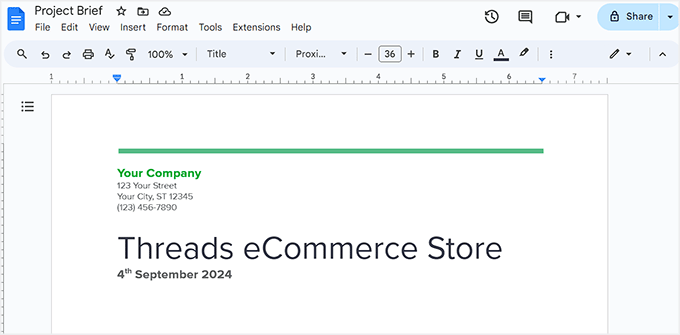
Begin by adding your name, company information, address, and contact details in the document's upper right section. Then create a descriptive project title as the document's main heading.
Next, add a 'Project Description' heading followed by detailed explanation of your eCommerce store concept. Include information about your market niche and growth expectations following website launch.
 " alt="Add project description" class="wp-image-306564 perfmatters-lazy" data-src="https://www.wpbeginner.com/wp-content/uploads/2024/10/add-project-description.png" data-srcset="https://www.wpbeginner.com/wp-content/uploads/2024/10/add-project-description.png 680w, https://www.wpbeginner.com/wp-content/uploads/2024/10/add-project-description-300x148.png 300w" data-sizes="(max-width: 680px) 100vw, 680px">