A Practical Guide to Displaying Upcoming Events on Your WordPress Site
By WordPress Experts |
For those managing business websites, community platforms, or personal blogs, showcasing upcoming events through WordPress offers significant advantages.
This approach helps raise awareness about your activities and can lead to increased participation. Additionally, providing visitors with easy access to comprehensive event details online enhances their overall experience.
Many experienced WordPress developers regularly feature upcoming events on their websites, including webinars, workshops, expert interviews, and similar activities. This practice has proven effective for increasing visibility and encouraging user registrations.
This guide will walk you through the process of displaying upcoming events on your WordPress site.
Benefits of Displaying Upcoming Events on Your WordPress Site
Your WordPress site can accommodate various types of events, including conferences, workshops, webinars, concerts, interviews, and social media events.
However, if these events remain hidden from visitors, attendance rates may suffer. A well-designed event display can substantially improve participation numbers.
When users can easily discover and learn about your events, they become more likely to attend. A clear, informative presentation serves as a digital invitation, encouraging visitors to register or plan their attendance.
For instance, many WordPress professionals have successfully promoted free workshops on topics like email list growth through dedicated blog posts.
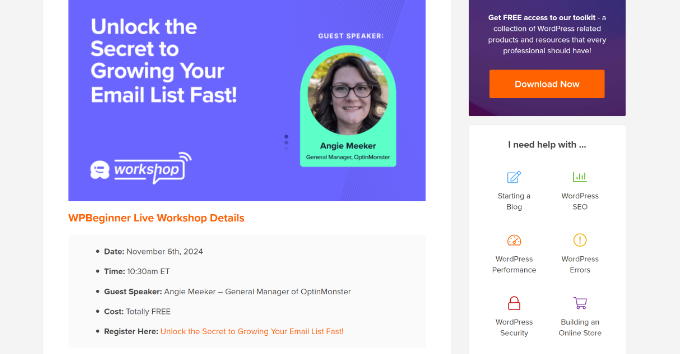
Displaying upcoming events also gives visitors reasons to return to your site regularly. They can stay informed about future activities, which builds engagement and encourages repeated visits for updates.
For this reason, featuring in-person events on your WordPress site can also be beneficial. In such cases, you can provide essential information like ticketing details and venue directions.
Let's explore a straightforward method for displaying upcoming events in WordPress. This article covers the following sections:
- Creating Events and Calendars in WordPress
- Displaying Upcoming Events in WordPress
- Bonus: Monetizing Upcoming Events
Creating Events and Calendars in WordPress
The simplest approach to creating calendars and upcoming events in WordPress involves using a dedicated event management plugin. Many WordPress professionals consider Sugar Calendar to be a comprehensive solution for this purpose.
This plugin provides everything needed to create multiple calendars, set event start and end times, sell tickets online, establish recurring events, synchronize with Google Calendar, integrate with form plugins, and more.
First, install and activate the Sugar Calendar plugin. If you require assistance with this step, numerous WordPress installation guides are available online.
After activation, navigate to the Calendar » Settings page from your WordPress dashboard and enter your license key in the designated field.
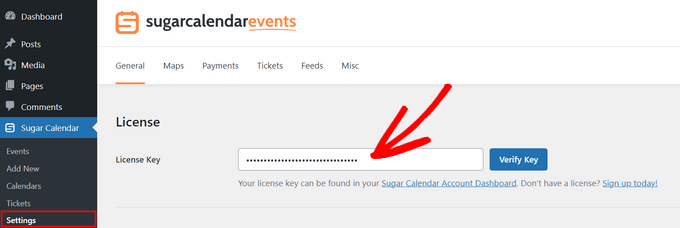
You can locate this key in your Sugar Calendar account area. After entering the key, click the 'Verify Key' button.
Once completed, the next step involves creating a new calendar. The plugin automatically adds a calendar to your site, but you might prefer to create a customized version.
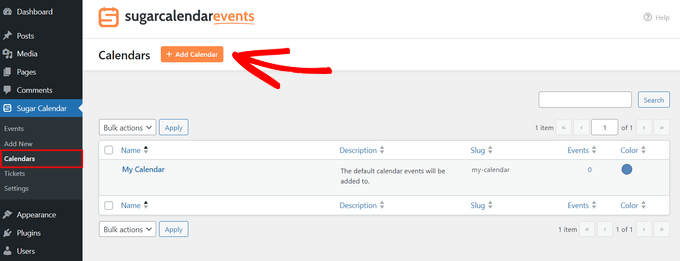
To begin, go to Sugar Calendar » Calendars from your WordPress admin dashboard and click the '+ Add Calendar' button.
Next, enter a calendar name at the top and select a slug.
You can also choose a parent calendar, add a description, and select a color to differentiate between various calendars.
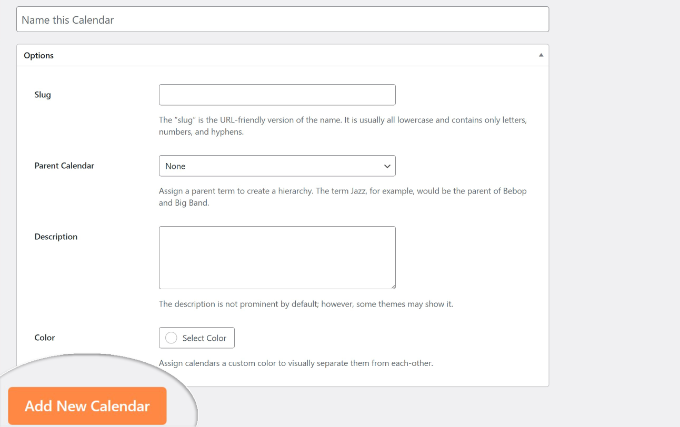
When finished, click the 'Add New Calendar' button.
Repeat this process to add as many calendars as needed to your WordPress site. For more detailed information, consult available guides on creating simple event calendars.
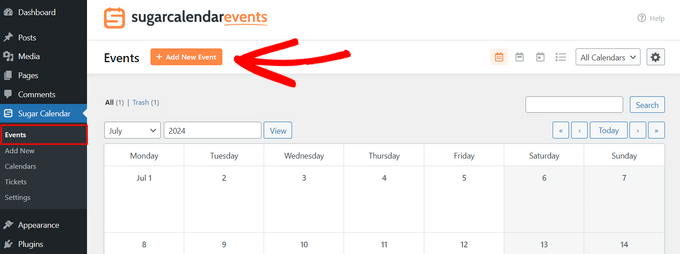
Next, add events to your site and display them on the calendar. Start by going to Sugar Calendar » Events from the WordPress admin panel and clicking the 'Add New Event' button.
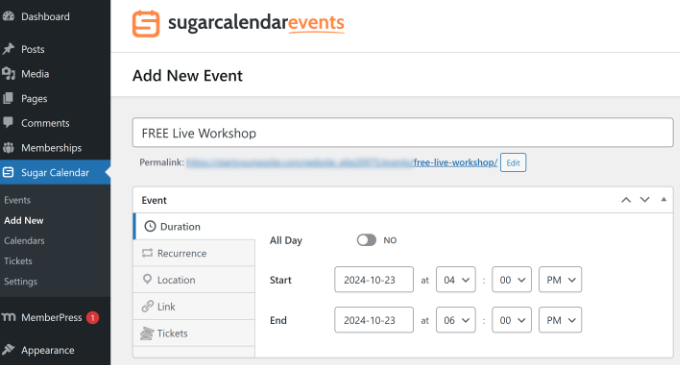
Then, enter a name for your new event at the top.
From here, set the start and end date and time under the 'Duration' tab.
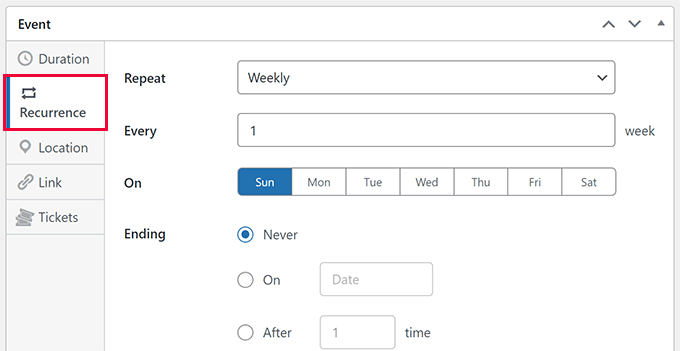
If the event occurs multiple times, switch to the 'Recurrence' tab and select when it will repeat. For additional details, refer to tutorials about displaying recurring events in WordPress.
You can also add a location for physical events, enter a link to display event details on another page, or redirect users to a different page. The plugin also offers options for selling event tickets online, which we'll discuss further in the bonus section.
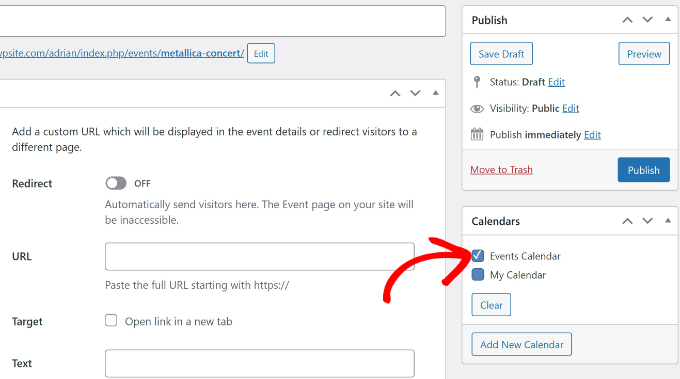
Once completed, select the calendar where your upcoming events will appear.
Finally, click the 'Publish' button.
Displaying Upcoming Events in WordPress
Now that you've created a calendar and added events, it's time to display them on your WordPress website.
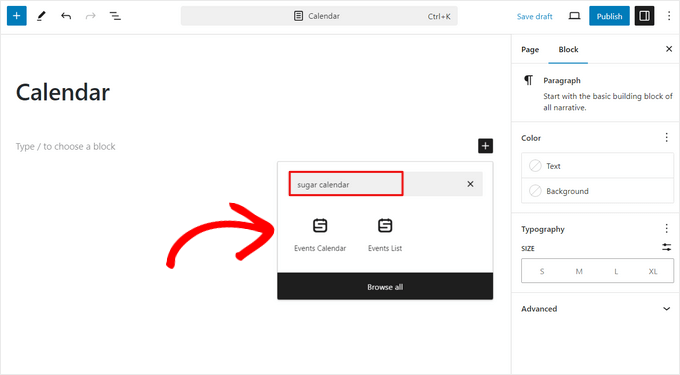
To begin, create a new page or edit an existing one. Once in the content editor, click the '+' icon and search for Sugar Calendar blocks. You'll find two blocks: 'Events Calendar' and 'Events List.'