A Comprehensive Guide to Safely Updating PHP Versions in WordPress
Maintaining an up-to-date PHP version is essential for optimal WordPress performance and security. Many hosting providers simplify this process, but proper preparation ensures a smooth transition without disrupting your website.
Utilizing the most recent PHP release can dramatically enhance your site's speed and security. While numerous web hosts facilitate straightforward updates, careful verification of compatibility remains crucial before implementation.
This guide provides detailed instructions for securely updating the PHP version on your WordPress installation.
The Importance of PHP Version Updates for WordPress
Upgrading your WordPress site's PHP version can substantially improve operational efficiency.
WordPress operates on PHP, an open-source programming language. Current requirements mandate PHP 7.4 or newer versions for proper functionality.
New PHP releases typically include security patches that address vulnerabilities, protecting your site from potential threats. These updates also introduce performance enhancements that accelerate processing and reduce memory consumption.
For these reasons, experienced developers strongly recommend maintaining the latest stable PHP version. Currently, PHP 8.3.2 represents the most recent stable release.
Operating with outdated PHP versions may compromise security, decrease loading speeds, and generate compatibility errors with WordPress core files, plugins, or themes. Many WordPress experts have documented how PHP updates from hosting providers affect WordPress operations.
Fortunately, most WordPress hosting companies prioritize offering current PHP versions to meet platform requirements. Some providers implement automatic background updates that occur without user intervention.
Nevertheless, staying informed about PHP developments remains advisable. Understanding feature changes and potential impacts helps prevent functionality issues. Certain plugins, themes, or applications might require temporary reversion to older PHP versions during compatibility adjustments.
With these considerations in mind, let's examine methods for checking your current PHP version and provide step-by-step update procedures for various hosting environments.
- Checking Your Current PHP Version in WordPress
- Essential Preparations Before PHP Updates
- PHP Version Updates in Bluehost
- PHP Version Updates in Hostinger
- PHP Version Updates in SiteGround
- PHP Version Updates in HostGator
- PHP Version Updates in DreamHost
- PHP Version Updates in WP Engine
- PHP Version Updates in Other Hosting Providers
- Common Questions About PHP Version Changes
Checking Your Current PHP Version in WordPress
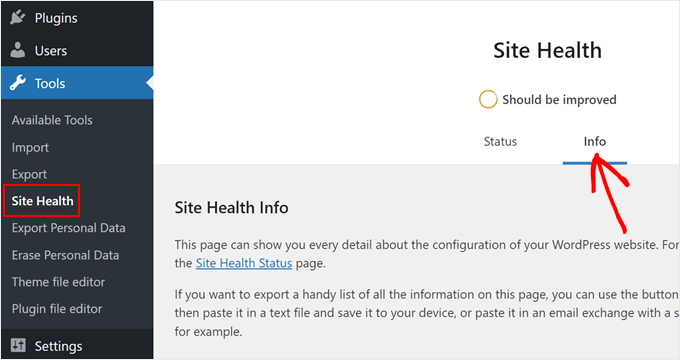
WordPress simplifies PHP version verification through its administrative interface. Begin by accessing your dashboard and navigating to Tools » Site Health.
Select the 'Info' tab within this section.
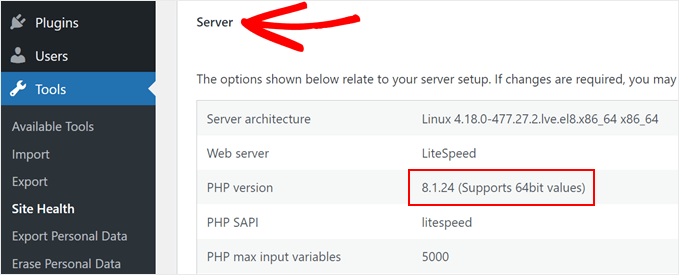
Scroll downward and expand the 'Server' section. This area displays comprehensive server information, including your current PHP version.
The demonstration example shows PHP version 8.1 in use.
Essential Preparations Before PHP Updates
As with any system modification, ensuring your live site remains error-free requires careful preparation. Complete these essential steps before updating your PHP version:
- Update WordPress core, themes, and plugins– This ensures compatibility with newer PHP versions. Reputable plugin developers typically maintain current compatibility with recent PHP releases.
- Create comprehensive website backups – Utilize backup solutions to generate complete site copies. This precaution enables restoration to functional versions if complications arise.
- Establish a staging environment – Testing PHP updates in staging prevents live site disruptions from potential compatibility issues.
- Implement PHP compatibility verification tools– Specialized plugins can identify potential conflicts with new PHP versions before implementation.
PHP Version Updates in Bluehost
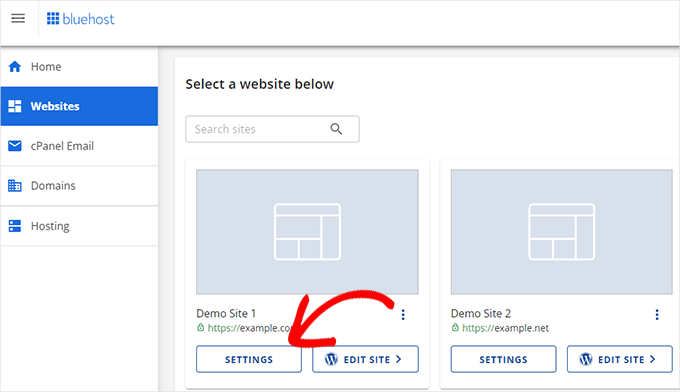
Begin by accessing your Bluehost control panel and selecting the 'Websites' tab in the left navigation.
Choose the specific website requiring PHP updates, then click the 'Settings' button.
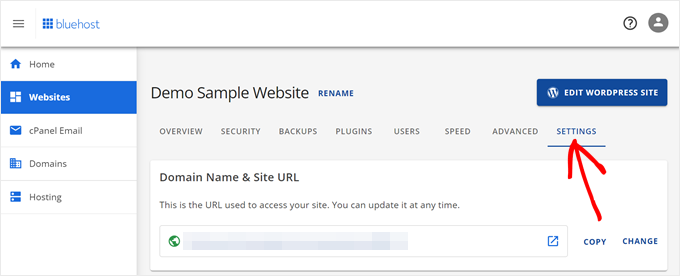
Navigate to the 'Settings' tab within the website management interface.
This section contains advanced configuration options for your WordPress installation.
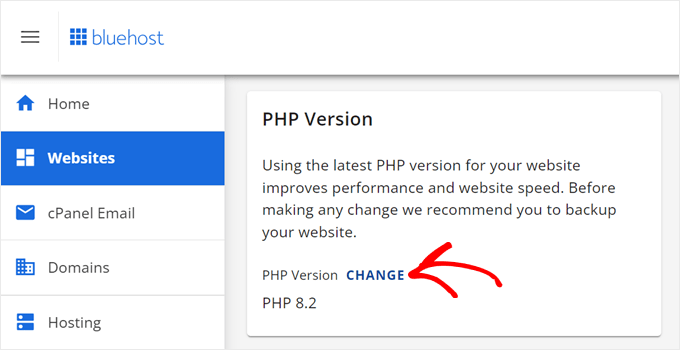
Scroll to the PHP Version section within the settings.
Click 'Change' adjacent to your current PHP version designation.
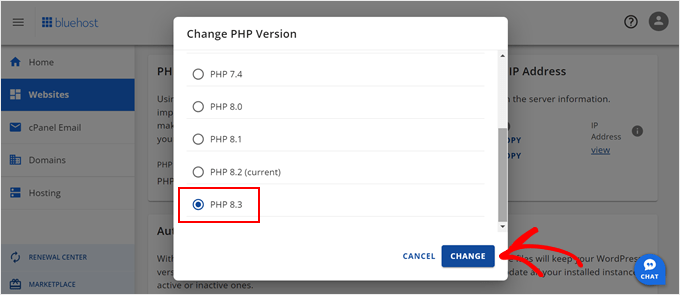
Select your desired PHP version from available options, then confirm with the 'Change' button.
Bluehost will immediately implement the selected PHP version for your website.
PHP Version Updates in Hostinger
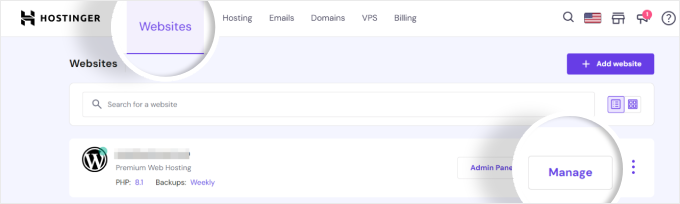
Access your Hostinger account dashboard and select the 'Websites' section.
Click the 'Manage' button corresponding to the website requiring PHP version modification.
This action opens the specific website's management dashboard.
Locate the 'PHP Configuration' option within the Advanced menu in the left sidebar.
Hostinger displays available and supported PHP versions for selection.
Choose your preferred PHP version and click 'Update' to save configuration changes.