A Practical Guide to Implementing Visual Regression Testing for WordPress Sites
Maintaining consistent visual presentation across a WordPress website can present significant challenges. Minor updates or CSS adjustments may inadvertently disrupt layouts, often going unnoticed until users report issues.
Manual verification of every page proves impractical due to time constraints and the likelihood of overlooking subtle changes.
While visual regression testing may sound technical, it doesn't require specialized development tools. This approach offers a systematic method to reduce manual checking time and prevent layout inconsistencies.
After evaluating various tools and methodologies, I've identified an accessible solution that doesn't demand coding expertise. This guide demonstrates how to implement visual regression testing on WordPress installations through straightforward steps.
Understanding Visual Regression Testing
Visual regression testing involves comparing website design before and after updates to identify unintended visual changes. This process captures screenshots of pages and analyzes differences between versions.
Whenever WordPress core updates occur, plugins are installed, themes are modified, or code adjustments are made, front-end elements may shift unexpectedly. These changes could include misaligned buttons, broken layouts, or images failing to display properly.
The primary challenge lies in detecting these visual anomalies before users encounter them. By implementing visual regression testing, website administrators can identify issues proactively rather than reactively.
The methodology follows a simple pattern: capture baseline screenshots, implement changes, capture new screenshots, then compare results to identify visual discrepancies.
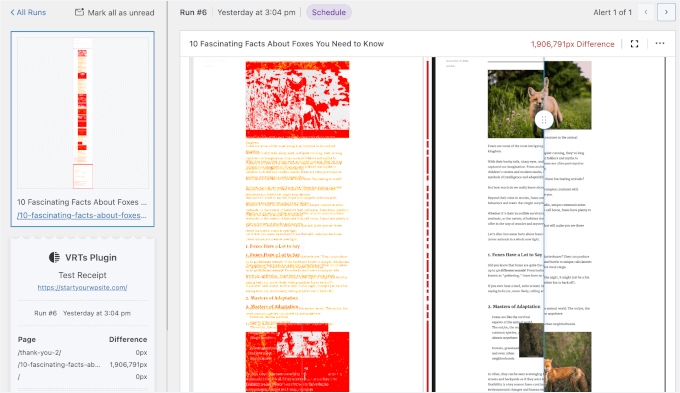
When testing on staging environments, administrators can safely implement updates and conduct comparisons to detect visual issues before deploying changes to production sites.
Manual comparison isn't necessary. Specialized tools automate screenshot comparisons and evaluate website appearance across various screen dimensions, helping identify layout problems on desktop, tablet, and mobile devices.
The Importance of Visual Regression Testing for WordPress Administrators
For WordPress site managers, visual regression testing serves as a time-efficient safeguard. Instead of manually inspecting every page following updates, this approach generates visual reports highlighting changes that require attention.
This methodology proves particularly valuable for agencies managing multiple WordPress installations, freelancers overseeing client websites, and e-commerce operators ensuring product and checkout pages maintain proper functionality.
Essentially, visual regression testing helps prevent unexpected issues, conserves time, and ensures WordPress sites operate smoothly.
The following sections outline a straightforward approach to implementing visual regression testing in WordPress environments:
- Step 1: Install and Activate the Visual Regression Testing Plugin
- Step 2: Configure the VRTs Plugin Settings
- Step 3: Add New Pages or Posts to Test
- Step 4: Check for Visual Differences
- Step 5: Review and Take Action
- FAQ: How to Run Visual Regression Testing in WordPress
- Next Steps: Improve Your WordPress Site Design
Step 1: Install and Activate the Visual Regression Testing Plugin
This tutorial utilizes the VRTs plugin due to its accessibility for beginners and straightforward implementation for visual regression testing. Whether dealing with layout shifts, missing interface elements, or broken components following updates, VRTs facilitates early detection.
The plugin operates by capturing screenshots of selected pages. Comparisons can be initiated manually or scheduled to execute automatically after site modifications, such as plugin updates or theme adjustments.
The tool compares baseline and updated screenshots side-by-side, highlighting visual variations.
Rather than manually verifying each page, administrators receive visual reports indicating changes and potential issues.
To begin installation, visit the VRTs website and create an account by selecting the free trial option.
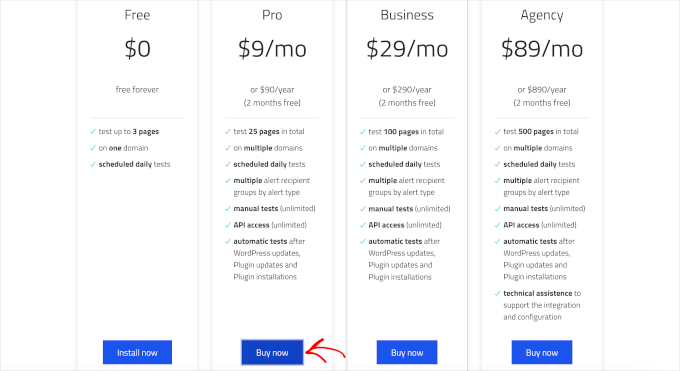
Select from available subscription tiers.
The complimentary tier permits testing up to three pages daily on a single domain with scheduled daily tests. Premium tiers enable testing additional pages, executing manual tests, and automatically running visual regression tests following WordPress core, plugin, and theme updates.
Choose the appropriate tier and proceed with installation.
Complete account registration and payment information as required.
Following successful registration, access the VRTs dashboard to download the plugin as a compressed archive file.
Navigate to the Plugins administration section and select the upload option. Choose the downloaded VRTs plugin archive file.
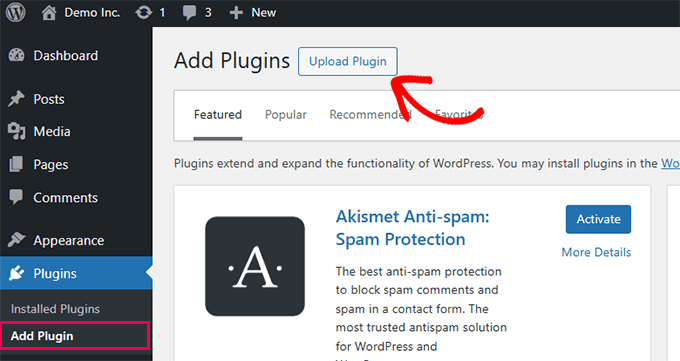
Activate the plugin following successful installation.
Step 2: Configure the VRTs Plugin Settings
After activation, determine when visual regression tests should execute.
Access the VRTs settings section within the WordPress administration menu.
Navigate to the Triggers configuration area. This section determines when the plugin automatically captures and compares screenshots.
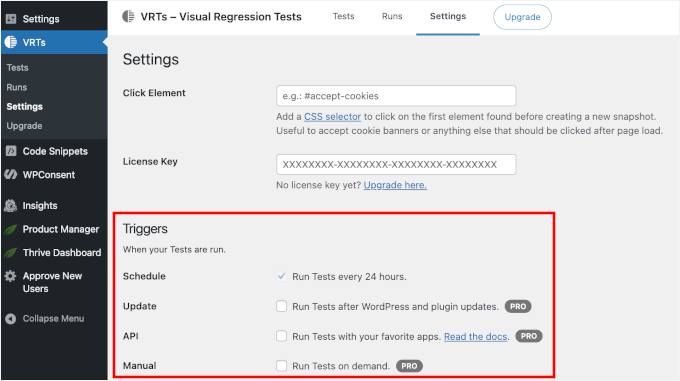
Available configuration options include:
- Execute Tests every 24 hours (Basic) – Default configuration. The plugin automatically checks selected content for visual changes daily.
- Execute Tests following WordPress and plugin updates (Advanced) – Ideal for detecting layout issues immediately following updates.
- Execute Tests with external applications (Advanced) – Integrate VRTs with external tools or workflows using webhook connections.
- Execute Tests manually (Advanced) – Initiate tests as needed directly from the WordPress administration interface.
Select the appropriate trigger for your workflow and save configuration changes.
Step 3: Add New Pages or Posts to Test
Following configuration, select which pages or posts to include in visual regression testing.
Navigate to the Tests management section. Select the option to add new tests, then choose specific posts or pages for inclusion.
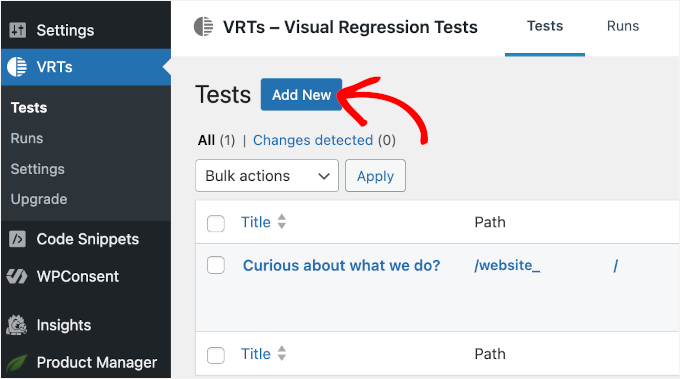
Within the displayed interface, select posts or pages for visual regression testing inclusion.
Confirm selections to create new tests.
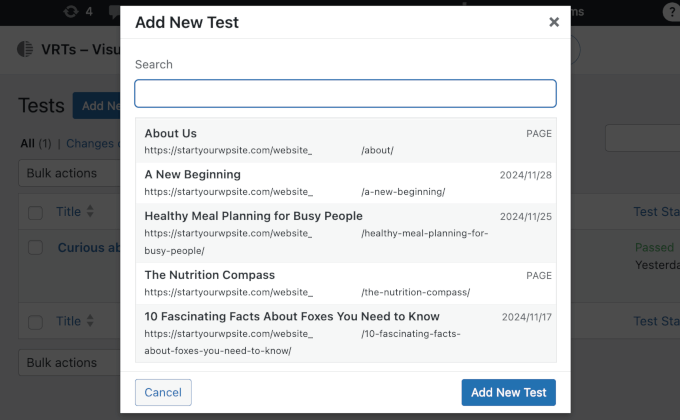
The VRTs plugin captures initial screenshots of selected pages, establishing baseline references for future comparisons.